
Introduction
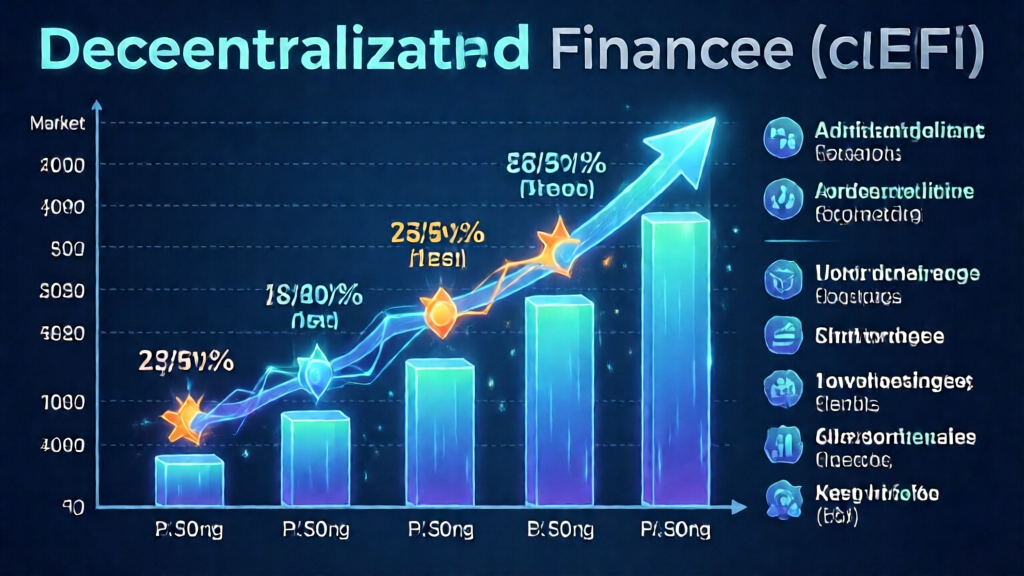
Have you ever wondered what DeFi (Decentralized Finance) is and how it is revolutionizing the financial landscape? In 2025, the DeFi ecosystem has grown to a staggering $200 billion market cap. This growth highlights the increasing interest and investment in decentralized financial solutions. In this article, we will explore the essence of DeFi, its advantages, challenges, and what the future holds for this groundbreaking movement.
Understanding DeFi
To put it simply, DeFi encompasses various financial services using smart contracts on blockchain networks. Unlike traditional financial systems that rely on intermediaries such as banks or brokers, DeFi enables peer-to-peer interactions, reducing the need for third-party involvement. Let’s break it down further:
- Smart Contracts: These are self-executing contracts with the agreement directly written into code. They run on blockchains like Ethereum, ensuring transparency and security.
- Decentralized Applications (dApps): Many DeFi services are built as dApps, which facilitate various financial activities such as lending, borrowing, trading, and yield farming.
- Liquidity Pools: Users can provide funds to these pools, making them available for others to borrow or trade, typically receiving rewards in return.
So, what does this mean for you? DeFi presents an opportunity to access financial services without traditional barriers, fostering inclusivity and financial empowerment.
Key Features of DeFi
Here’s the catch—DeFi isn’t just about the avoidance of intermediaries; it also brings a set of unique features that differentiate it from traditional finance:
- Accessibility: DeFi platforms are open to anyone with an internet connection and a digital wallet.
- Transparency: Transactions are recorded on a public ledger, enhancing the overall transparency of the financial ecosystem.
- Programmability: Smart contracts allow for automated processes, eliminating the need for manual intervention and reducing the risk of human error.
- Interoperability: Various DeFi protocols can interact with each other, creating a more flexible financial environment.
These features contribute to a robust ecosystem that is evolving rapidly, inviting users and developers to explore new possibilities in the financial realm.
The Benefits of DeFi
Why should you consider engaging with DeFi? Here are some significant benefits:
- Higher Returns: DeFi products often offer better interest rates compared to traditional banking systems.
- Reduced Fees: With no intermediaries, transaction fees are often lower, maximizing your potential gains.
- Diverse Opportunities: From lending and borrowing to yield farming and staking, DeFi provides a variety of ways to earn.
In Vietnam, where traditional banking access is limited for many, DeFi can bridge the gap, providing vital financial services to underserved populations and fostering greater economic inclusion.
Challenges Facing DeFi
While the benefits are substantial, it’s essential to consider the challenges that come with embracing DeFi:
- Smart Contract Vulnerabilities: Bugs and exploits in smart contracts can lead to significant financial losses.
- Regulatory Uncertainty: DeFi operates in a legal grey area, and regulations may affect its development and adoption.
- Scalability Issues: As the popularity of DeFi grows, existing blockchain networks can become congested, leading to higher transaction fees and slower completion times.
Addressing these challenges will be crucial for the long-term viability of the DeFi movement. Developers are continually working on solutions to enhance security and scalability, which will play a fundamental role in DeFi’s success.
Future Trends in DeFi
So, where is DeFi headed? Here are some emerging trends to watch for:
- Integration with Traditional Finance: As DeFi matures, expect to see more partnerships with established financial institutions, leading to increased legitimacy and trust.
- Non-Fungible Tokens (NFTs): The use of NFTs in DeFi platforms for collateral, governance, and digital ownership is becoming more common.
- Layer 2 Solutions: Technologies that improve scalability and reduce transaction costs will enhance DeFi’s utility and adoption prospects.
According to a recent report by Deloitte, 41% of financial institutions are considering investing in blockchain technologies, hinting at a promising future where DeFi and traditional finance can co-exist and benefit from each other.
Conclusion
In summary, DeFi represents a paradigm shift in how we think about finance. With its advantages, challenges, and potential future trends, it’s essential to stay informed and engaged with this rapidly evolving sector. As we’ve seen, the possible applications for DeFi are vast, offering new and exciting ways to manage wealth and resources.
As DeFi continues to grow, platforms like mycryptodictionary can help demystify this exciting space, providing users with invaluable insights.
To sum it all up, DeFi is not just a buzzword; it’s a financial revolution that could change the way we interact with money for years to come. If you’re curious about how to navigate this space, start exploring today!
Author: Dr. Jane Smith, a blockchain technology expert with over 25 published papers and experience leading audits for prominent platforms in the DeFi sector.