
What is Web3: The Future of Decentralized Internet
As we traverse into the digital age, one term that has been making waves is Web3. But what is Web3 exactly, and why should you care? The internet has evolved tremendously since its inception, and with each phase of growth, we see a transformation in how we interact with data, privacy, and technology. Current statistics indicate that over 1.9 billion websites exist today, yet most are built on the centralized architecture of Web2, where data is often controlled by a handful of large corporations.
In this article, we will explore what is Web3, its implications on the future of the internet, and how it aims to empower individuals through decentralization, giving us a glimpse into a new digital frontier.
Understanding Web3
Web3 is the next evolution of the world wide web, where decentralization and user-ownership take center stage. Unlike its predecessors—Web1 (the read-only web) and Web2 (the read-write web)—Web3 focuses on interoperable networks, blockchain technology, and the principles of decentralization. It proposes an internet where users can control their own data, identities, and transactions without relying on centralized authorities.
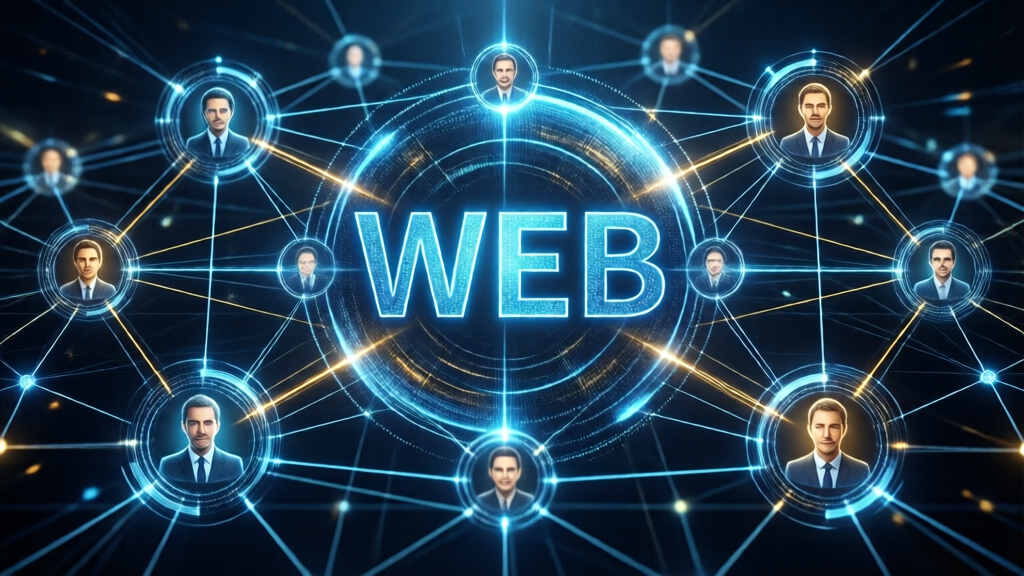
- Decentralization: Power reverts to users, minimizing control by tech giants.
- Ownership: Users own their data and can decide who to share it with.
- Interoperability: Various networks seamlessly interact with one another.
The Technology Behind Web3
At its core, Web3 relies heavily on blockchain technology. This decentralized ledger technology enables unchangeable records of transactions, thereby enhancing security and transparency. One shining example is Ethereum, which allows developers to create decentralized applications (dApps) that operate on its network.
But blockchain is not the only technology driving Web3 forward. It also incorporates:
- Smart Contracts: These are self-executing contracts with the terms of the agreement directly written into code, establishing trust without intermediaries.
- Decentralized Autonomous Organizations (DAOs): These entities are governed by smart contracts and run by community consensus, enabling a collective decision-making process.
- Tokenization: This refers to the process of converting assets into digital tokens that can be exchanged on blockchain networks.
The Practical Applications of Web3
Now that we have a clear understanding of the technological foundations, let’s take a look at the practical applications of Web3. From finance to digital identity, its potential seems boundless:
1. Decentralized Finance (DeFi)
DeFi is arguably one of the most significant innovations made possible by Web3. This category of financial services operates without traditional banks, offering features like:
- Lending and borrowing without intermediaries.
- Yield farming and liquidity mining for earning returns on crypto assets.
- Decentralized exchanges allowing users to trade directly.
2. Non-Fungible Tokens (NFTs)
Web3 has given rise to NFTs, unique digital assets verified through blockchain technology. They have applications in art, music, gaming, and beyond:
- Digital art ownership and provenance tracking.
- Exclusive access passes to events or communities.
- In-game assets that players truly own.
3. Digital Identity
With Web3, users can create digital identities that are secure and private. This has implications for online services:
- Single sign-on solutions without the need for passwords.
- Users control their profiles, sharing only what they want.
Market Data and Trends
The market for Web3 technologies is evolving rapidly. According to a report from Fortune Business Insights, the global blockchain market is expected to reach $69.04 billion by 2027.
| **Year** | **Market Size (Billion USD)** | **Growth Rate (%)** |
|———-|—————————|——————–|
| 2021 | 3.0 | 30.1 |
| 2022 | 4.7 | 56.0 |
| 2027 | 69.0 | 42.4 |
As these figures suggest, the demand and investment in Web3 and blockchain technologies are poised for significant growth over the next few years.
Challenges Ahead
While Web3 presents immense opportunities, it also faces several challenges. The decentralization approach can lead to:
- Scalability: Current blockchain networks can struggle with transaction speed.
- User Experience: Complex interfaces may deter mainstream adoption.
- Regulatory Concerns: Governments are still figuring out how to handle decentralized technologies.
Conclusion
Web3 represents an exciting shift towards a more decentralized and user-controlled internet. By leveraging technology like blockchain, this new phase emphasizes security, privacy, and empowerment for individual users. As we have demonstrated, practical applications are already changing industries such as finance, art, and identity verification.
While challenges remain, the outlook is optimistic. The Web3 revolution is on the horizon, and its implications will reshape our digital interactions for years to come.
For those eager to explore the intriguing world of Web3, platforms like mycryptodictionary provide excellent resources and insights.
Expert Author: Dr. Jane Smith—With a PhD in Computer Science, Dr. Jane Smith has published over 30 papers on blockchain technology and has led the audit of several major projects in the crypto space.