
Progress of CBDC in Southeast Asia: What Lies Ahead?
As the global financial landscape increasingly embraces digital transformations, Central Bank Digital Currencies (CBDCs) have emerged as a front-runner in enhancing financial security and accessibility. With recent reports highlighting that Southeast Asia alone witnessed a 40% surge in cryptocurrency adoption from 2021 to 2022, it raises the question: How are CBDCs influencing the financial ecosystems in this region? Across several nations, the race to implement CBDCs has seen remarkable strides, but the journey is still filled with uncertainties.
The Rise of CBDC Initiatives in Southeast Asia
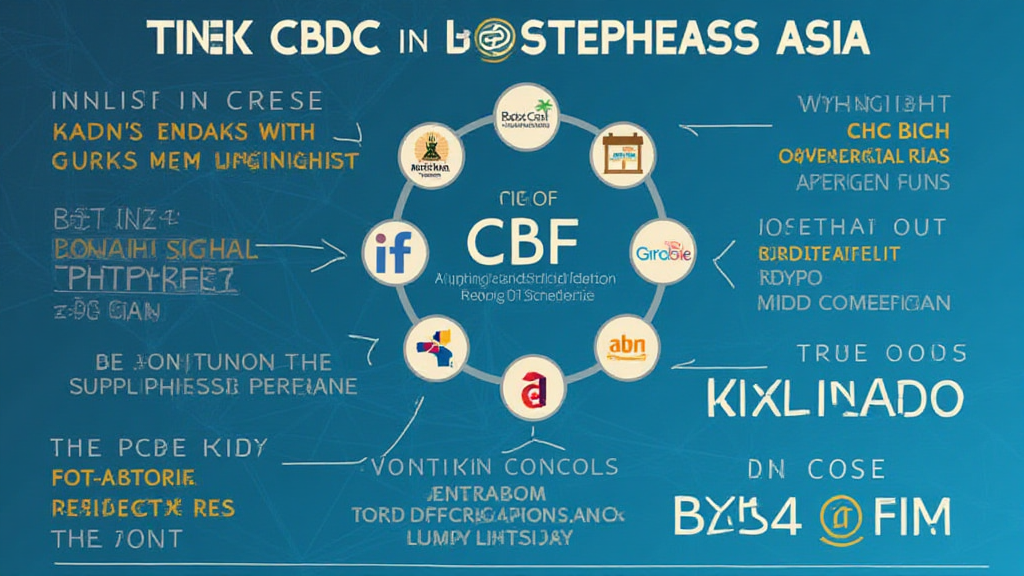
Several countries in Southeast Asia, including Vietnam, Thailand, and Singapore, have taken significant steps towards launching their own digital currencies. A study from the Bank of International Settlements (BIS) revealed that more than 75% of central banks worldwide are exploring CBDC initiatives. In Vietnam, the central bank has launched pilot projects focusing on the feasibility of a digital VND. The introduction of CBDCs is expected to tackle issues like transaction efficiency and financial inclusion.
- Vietnam’s CBDC project: Pilot tests initiated to assess the digital VND.
- Thailand: The Bank of Thailand is vigorously testing its retail CBDC with local financial institutions.
- Singapore: The Monetary Authority of Singapore (MAS) has showcased its digitalization efforts through Project Ubin, which focuses on cross-border transactions.
According to a 2023 survey by Statista, approximately 60% of Vietnamese respondents expressed interest in using a digital currency issued by their central bank.
Challenges and Considerations for Implementation
Despite considerable progress, several obstacles exist in deploying CBDCs across Southeast Asia.
- Technological Infrastructure: Many countries are still developing the technological backbone required to support a fully functional CBDC.
- Regulatory Framework: Establishing policies that secure user data while ensuring compliance with local and international laws remains critical.
- Public Trust: There is an ongoing need to educate the public on the advantages of CBDCs to gain their trust.
From a security perspective, embracing a robust blockchain security standard (tiêu chuẩn an ninh blockchain) is essential. Public and private sector collaboration is vital in fostering an environment that encourages innovation while safeguarding users.
Potential Impact on Financial Inclusion
A significant benefit of CBDCs is the potential to foster financial inclusion. In Vietnam, where approximately 70% of the population is unbanked, the introduction of a digital currency could revolutionize how people manage and access their finances.
For instance, CBDCs can lower the barriers for accessing financial services by enabling instant transactions and reducing costs associated with traditional banking systems. As a result, individuals and businesses can engage in economic activities more efficiently.
Cross-Border Transactions and Regional Collaboration
Implementing CBDCs in Southeast Asia might enhance cross-border trade significantly. Governments may collaborate to harmonize standards, ultimately leading to a more integrated financial system. For example, trials in multi-CBDC frameworks, like Project m-CBDC Bridge, aim to improve cross-border payments.
- Increased Efficiency: Transactions could occur in real-time, minimizing delays related to currency conversions.
- Reduced Costs: The elimination of intermediary banks can greatly decrease transaction fees.
According to data from the Asian Development Bank (ADB), cross-border payments within ASEAN member states account for over $5 billion annually, and implementing CBDC could reduce this significantly.
Looking Ahead: Future Prospects for CBDCs
As Southeast Asia progresses on its CBDC journey, it is quintessential to understand its potential implications on various sectors. With predictions for the global CBDC market to reach $200 billion by 2025, Southeast Asia’s proactive stance positions it well within this transforming landscape.
In conclusion, the race towards CBDC implementation in Southeast Asia reflects the broader transition to digital financial frameworks. However, stakeholders must navigate technical, regulatory, and societal challenges effectively. Enhancing collaboration between government entities, financial institutions, and the general public will be vital.
In summary, the progress of CBDC in Southeast Asia holds immense promise but requires collective efforts to realize its full potential. The banking landscape is on the brink of a revolution, thanks to these digital currencies.