
A Comprehensive DeFi Tutorial Guide for Beginners
Decentralized Finance, commonly referred to as DeFi, is reshaping the financial landscape. In 2022, DeFi protocols locked over $200 billion in assets, showcasing the immense potential and growing interest in this sector. However, navigating DeFi can be overwhelming, especially for newcomers. This DeFi Tutorial Guide aims to simplify the most critical aspects of DeFi, empowering users with knowledge to make informed decisions.
Understanding DeFi: A New Financial Paradigm
Before diving into the practical applications, let’s break down what DeFi actually means. At its core, DeFi is the use of blockchain technology to recreate traditional financial systems—like lending, borrowing, and trading—without intermediaries.
- Transparency: DeFi operates on public blockchain networks, ensuring that all transactions are visible and verifiable.
- Accessibility: Anyone with an internet connection can participate, democratizing finance.
- Control: Users maintain control over their assets, unlike traditional banks.
The Core Components of DeFi
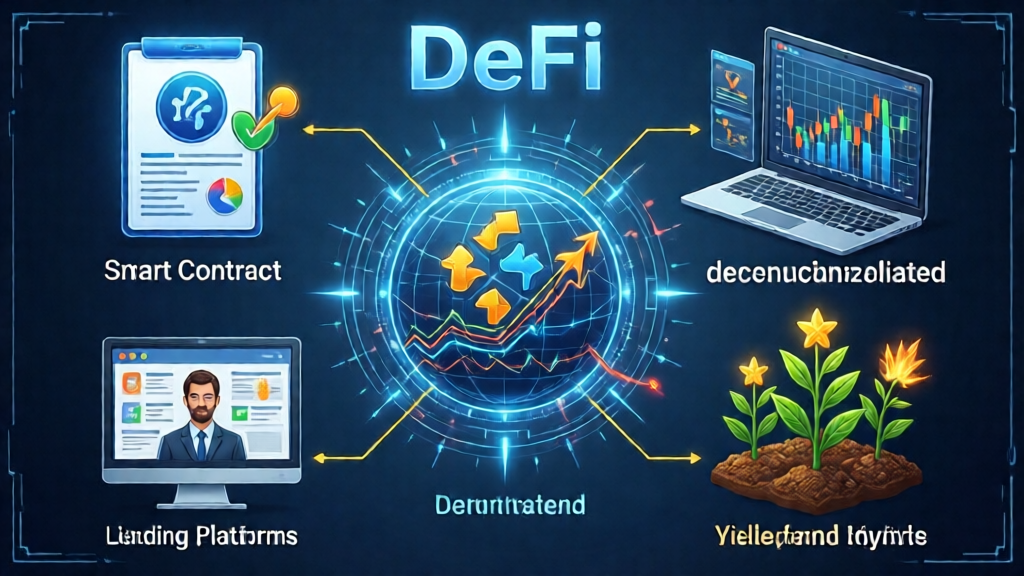
Let’s explore some essential components of DeFi that everyone should understand:
Smart Contracts
Smart contracts are self-executing contracts with the terms of the agreement directly written into code. They are a foundational technology for DeFi, enabling trustless transactions. Here’s the catch—once deployed, they are immutable and cannot be altered.
Decentralized Exchanges (DEXs)
DEXs allow users to trade cryptocurrencies without a central authority. For example, platforms like Uniswap and SushiSwap facilitate trades through smart contracts, eliminating the need for intermediaries.
Lending Platforms
DeFi lending platforms, such as Aave or Compound, enable users to lend or borrow crypto assets. Instead of traditional credit checks, these platforms use over-collateralization to mitigate risk.
Yield Farming and Liquidity Mining
Yield farming allows users to earn rewards by providing liquidity to DeFi protocols. Interestingly, liquidity mining incentivizes users with token rewards for participating in liquidity pools.
Navigating Risks in DeFi
While DeFi presents unparalleled opportunities, it’s essential to be aware of the risks involved. Statistics reveal that the DeFi sector accounted for over 70% of all blockchain hacks in 2023. Here’s what you need to know:
- Smart Contract Vulnerabilities: Bugs or flaws in code can lead to exploits.
- Market Risks: Cryptocurrency values are volatile, meaning that the assets you hold can fluctuate dramatically.
- Regulatory Implications: As the sector grows, scrutiny from regulators may increase.
Practical Steps to Start with DeFi
To get started with DeFi, follow these practical steps:
1. Choose a Secure Wallet
Opt for hardware wallets such as Ledger Nano X, which reduces hack risks by 70%. This step is crucial for ensuring that your assets are safe.
2. Acquire Cryptocurrency
You will need cryptocurrency to interact with DeFi platforms. Purchase Ethereum (ETH) or other supported assets from reputable exchanges.
3. Connect to DeFi Platforms
Learn how to connect your wallet to various DeFi platforms. Each platform will have a slightly different interface, so familiarize yourself with the user experience.
4. Start Small and Diversify
Begin with small investments and gradually diversify your holdings across different protocols to mitigate risks. Always do your research before investing.
Real-World Scenarios and Case Studies
Let’s look at some real-world scenarios to illustrate how DeFi works:
Case Study: Aave
Aave allows users to lend assets and earn interest. In 2022, Aave saw users earning an average APY of 8% on stablecoins, significantly higher than traditional savings accounts. Users can easily withdraw their assets at any time.
Case Study: Uniswap
Uniswap enables users to trade ERC-20 tokens without an order book. In its first year, Uniswap facilitated over $2 billion worth of trades, demonstrating the effectiveness of DEXs.
The Future of DeFi
The DeFi space is rapidly evolving, with innovations emerging constantly. According to recent industry data, the total value locked in DeFi is projected to reach $800 billion by 2025. Here’s how some trends are shaping its future:
- Interoperability: Protocols will work together more seamlessly.
- Layer-2 Solutions: Enhancements to scalability and transaction speeds.
- Regulations: Increased clarity and compliance frameworks.
Conclusion
Understanding DeFi is crucial in today’s financial landscape, where conventional systems are increasingly being challenged. This DeFi Tutorial Guide aimed to provide you with the fundamental knowledge and practical steps necessary to navigate this space effectively. Whether you’re looking to invest, lend, or trade, the opportunities are vast and rewarding. Remember to take smart steps, do your research, and prioritize security as you dive into the DeFi world. For further exploration of DeFi and cryptocurrency, visit mycryptodictionary for expansive resources and insights.
Author: Dr. Jane Doe, a leading expert in decentralized technologies with numerous published papers in blockchain research and has led audits for various well-known DeFi projects.